About us
The location:
On the edge of Hatherleigh, these fields are red clay-loam soil with Dartmoor hills in the distance. The fields were used for sheep pasture for several decades but we've been told previously grew potatoes and manglewurzels.
We are grateful to the previous farmers for we have inherited thick diverse hedgerows and a thriving earthworm population.
We started growing veg here in Autumn 2025 to supply fresh food for Hatherleigh, increase biodiversity and run community events. The market garden is set up as a CIC to embed community at the heart of the business.
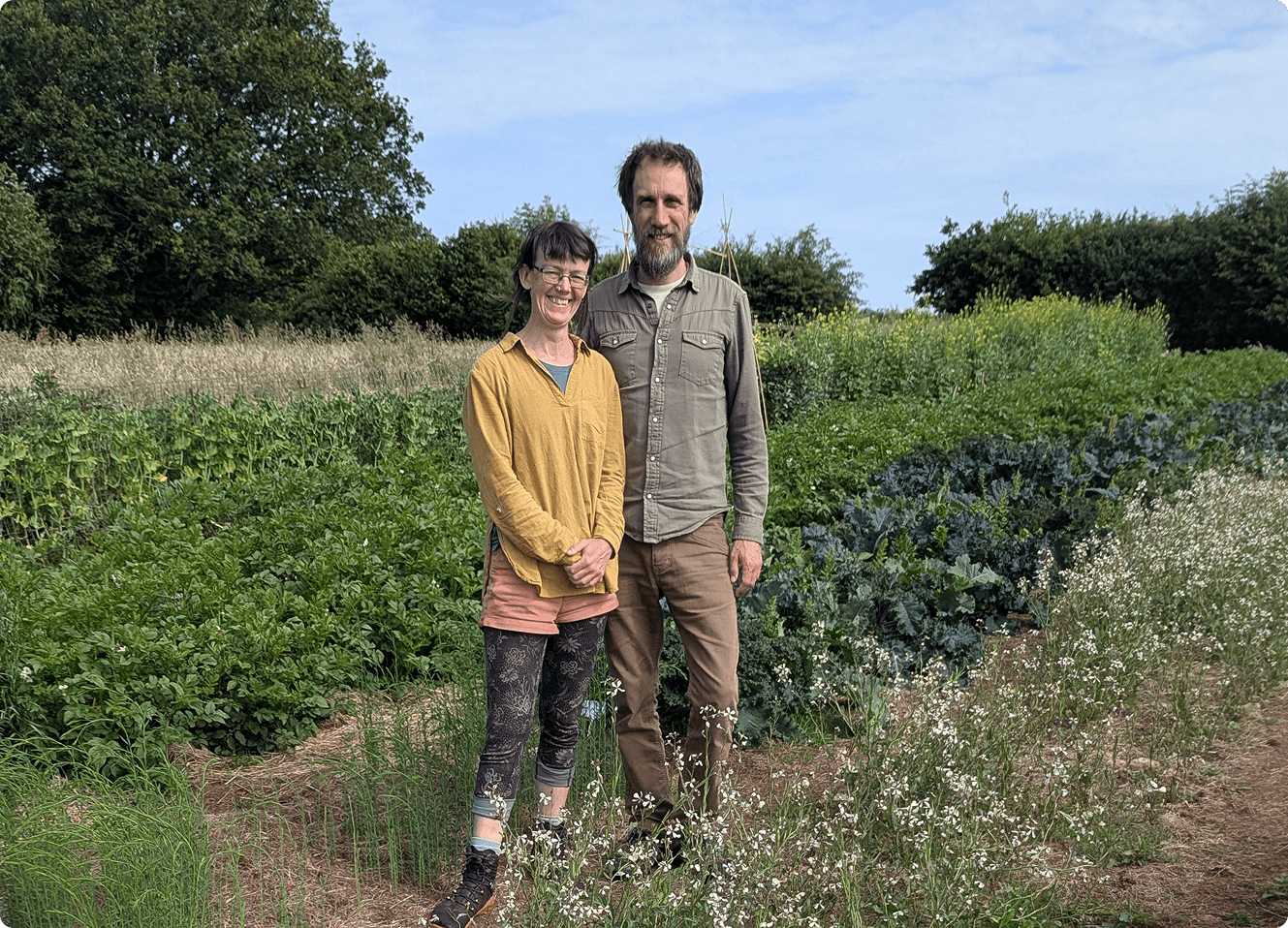
Our People
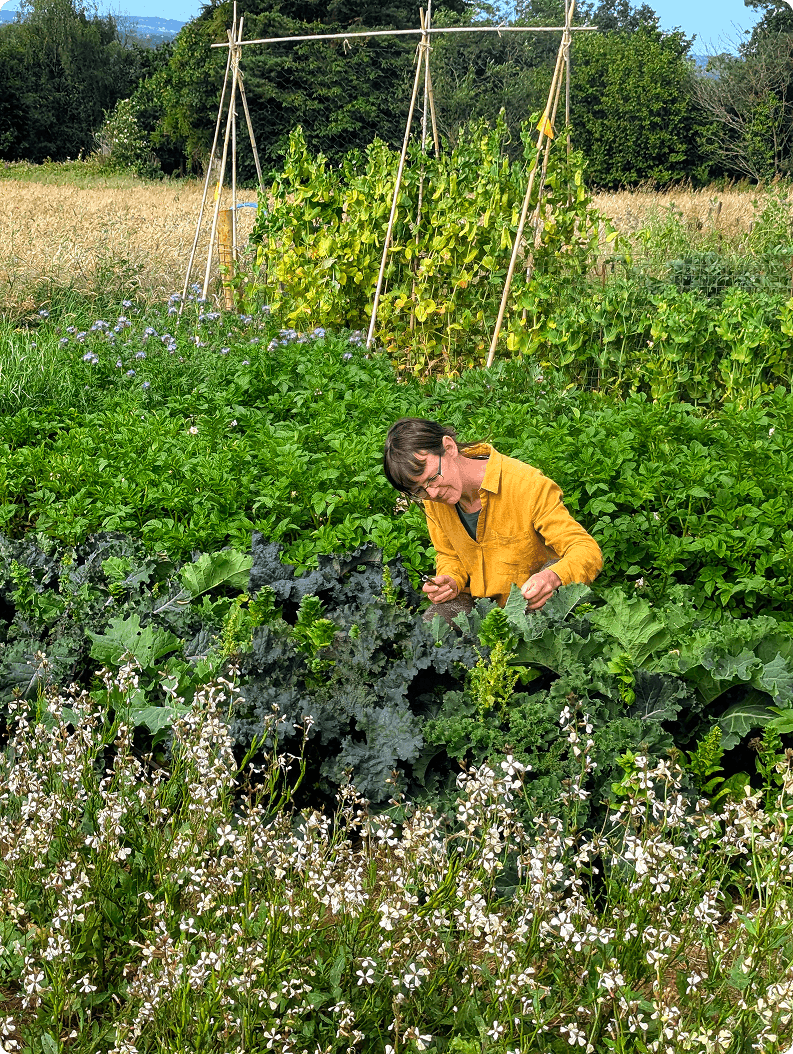
Jen Howarth - Veg grower and Director
I am passionate about growing food, increasing the resilience of local food systems and seed saving. I’ve worked at several veg farms over the years and trained in commercial small scale seed saving in 2023 with the Gaia Foundation.
I’m now passionate about sharing this knowledge and am available to run workshops on seed-saving tailored to different groups, with a particular interest in working with farmers and commercial growers as well as community groups. I love looking in hedgerows, taking photos of strange insects, and experimenting with fermenting foods. When not growing food I also enjoy cycling and participating in community events.
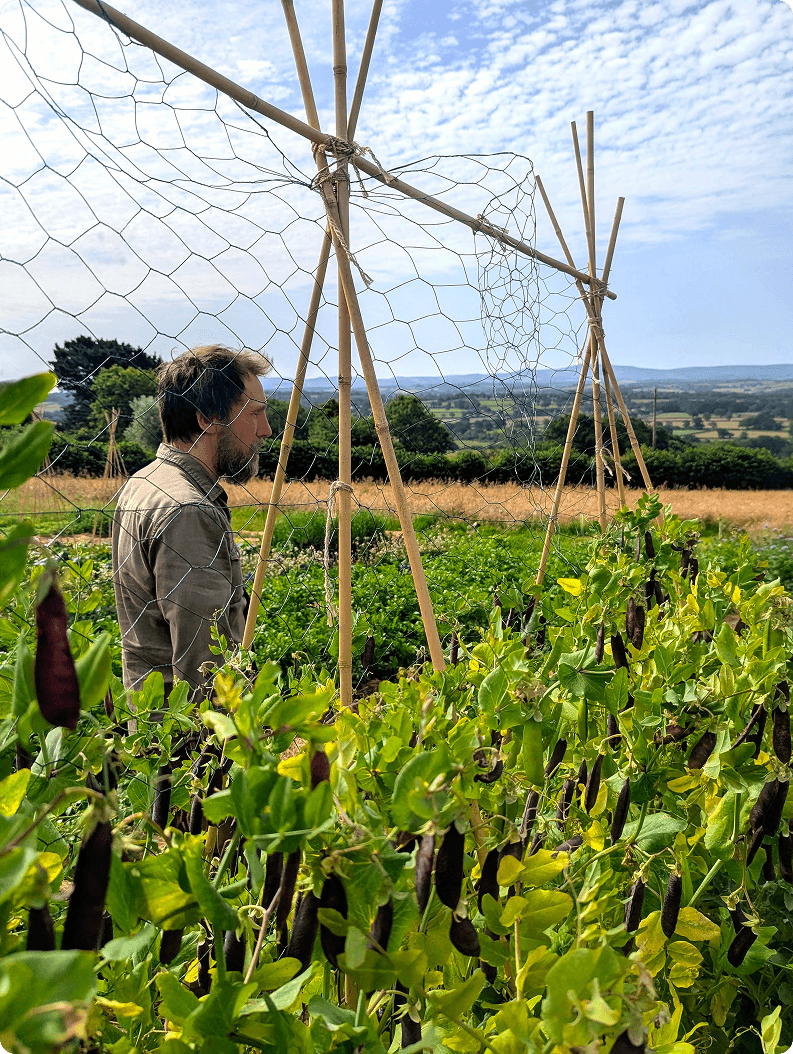
Paul 'Borage' Davey - Veg grower and Director
After fifteen years working in mental health services I realised my own wellbeing was better served working more with the land to grow food. So seven years ago I joined my partner, Jen, in the beautiful endeavour of growing veg in ecologically sound ways. I am particularly enthusiastic about collaborative local and regional projects that promote a regenerative culture that reconciles us humans with the world that bears us. And yes, I do have a special relationship with the herb Borage.
Alongside this I also work as a storyteller, mentor, facilitator and ceremonialist. You can find out more about this work here.
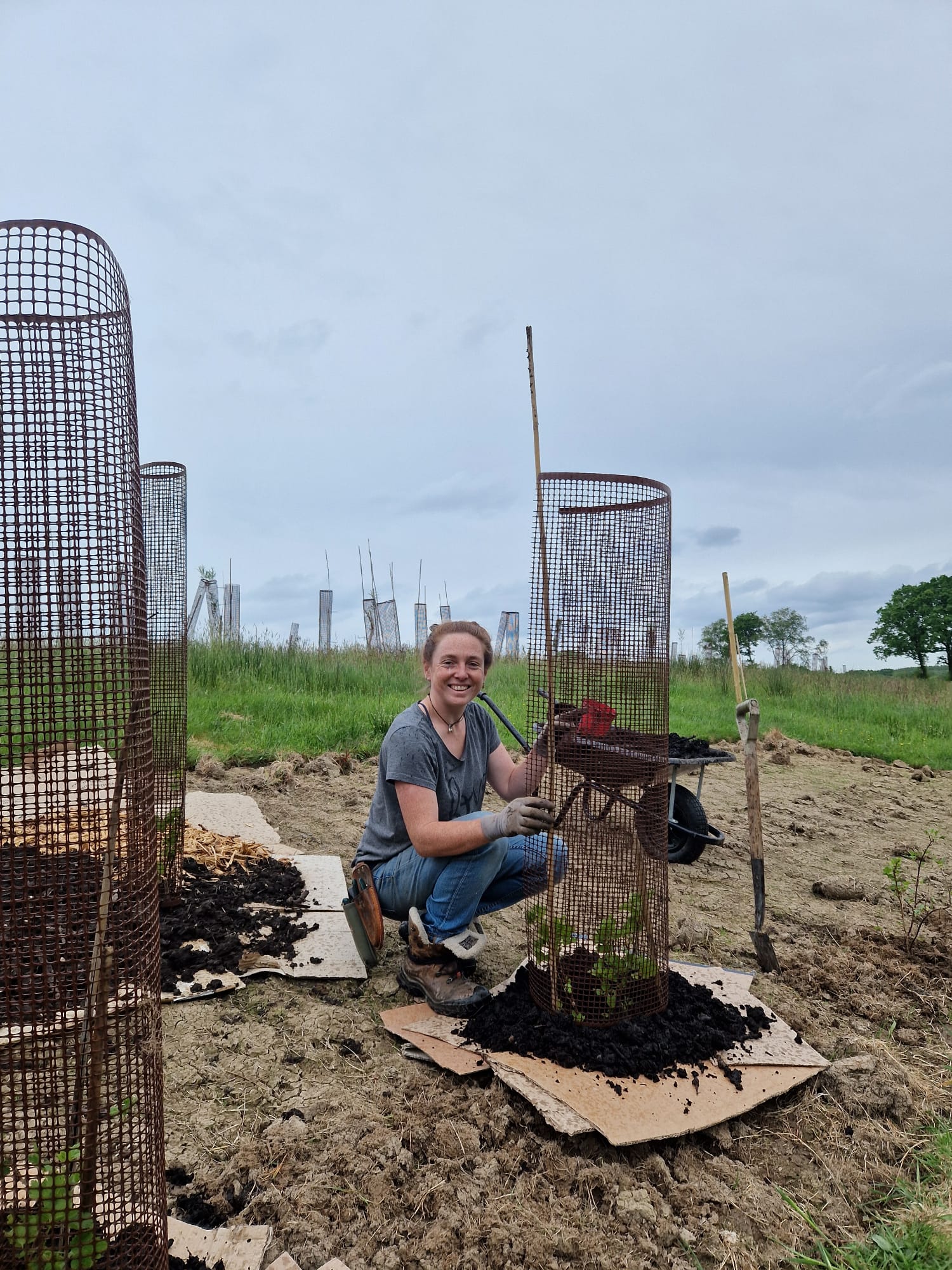
Emma Olliff - Advisor and Director
I am an ethnobotanist, ecologically trained gardener, veg grower, and beekeeper with a passion for connecting people to the natural world. Through guided foraging walks I share knowledge of plants, their traditional uses, and their role in local ecosystems. My partner and I aim to combine ecological principles, food growing, and land stewardship to promote a deeper understanding of sustainable living and our place in nature through our work as Wyrd and Wyld. Visit my Instragram here.
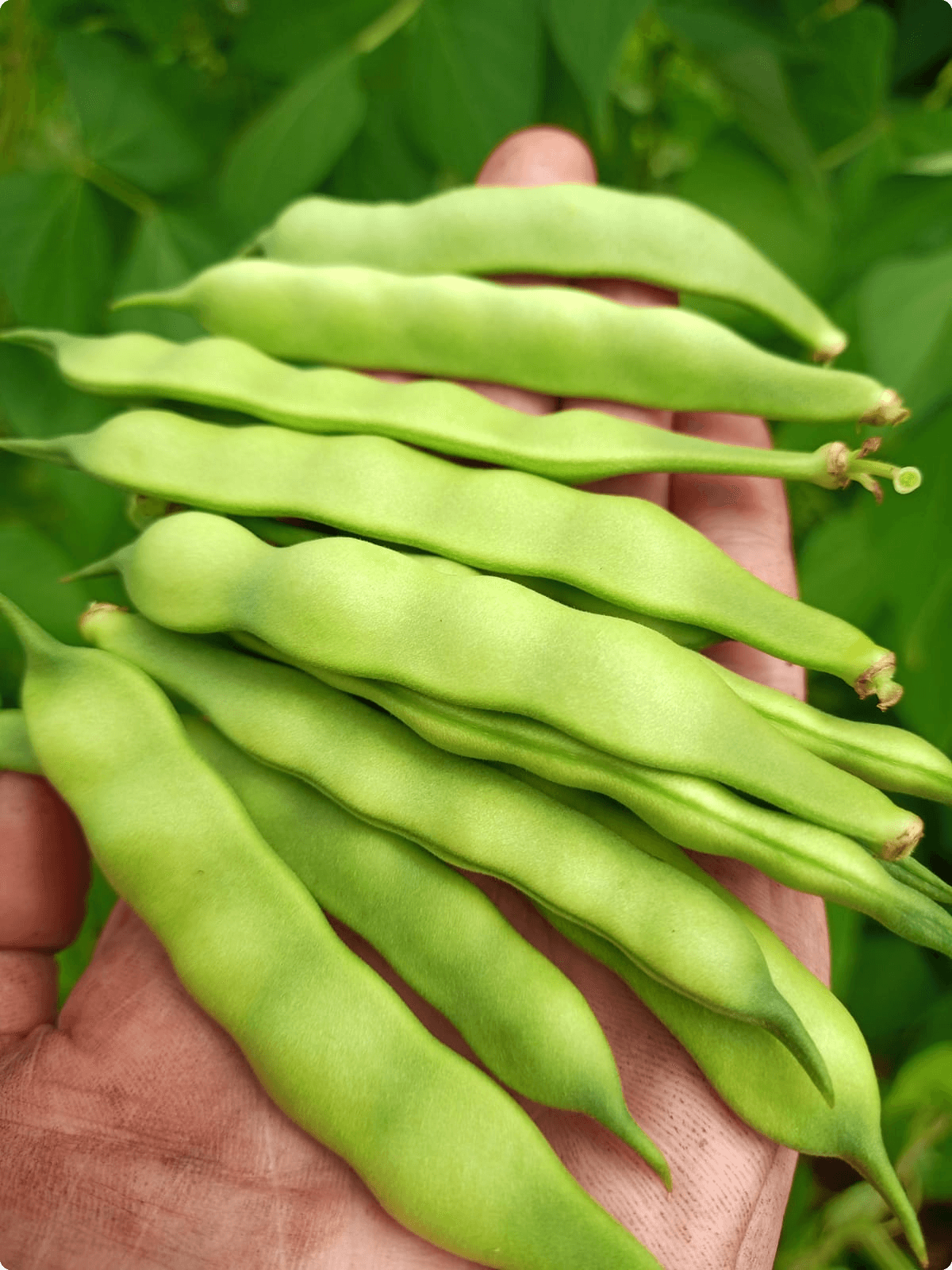
What is a Market Garden?
This term is used for smaller veg farms who are growing veg directly “for market” i.e to sell to the public.
Rather than an allotment or a private garden, a Market Garden is primarily commercial for the purpose of selling goods to the public. There has been a resurgence of these small farms in recent years, in part thanks to the work of the Landworkers' Alliance. Market Gardens have many different varieties of veg crops and are likely to be running market stalls and veg box schemes and selling direct to the customer. In contrast to much larger veg farms with bigger machinery, who may grow a smaller variety of crops and sell them to a wholesaler rather than directly to the public.
What does Organic mean?
We registered to certify Organic in January 2026 with the Biodynamic Association (who offer Organic certification as well as Biodynamic)
We pay a yearly subscription fee and they ensure we comply with the organic standards, visit us for a thorough yearly inspection and give us their stamp of approval. The conversion process takes 2 years, we can use an 'in conversion to Organic' label on our produce from January 2027 and will become fully certified in January 2028.
Farming Organically means more than avoiding herbicides, pesticides and synthetic fertilisers. We commit to buying organic certified seeds as much as are available, we will not use any peat on the farm, any bought in plants have to be from organic suppliers and we must only use approved inputs such as organic hay, straw or manure. Soil life and health must be managed with living cover crops (also called ‘green manures’) and crop rotations rather than artificial fertilisers and we have to keep really good records!
We are inspired by a range of other approaches including permaculture, agro-ecology and prioritising soil health. We work towards being as ‘closed loop’ as possible, creating fertility from the land, growing our own seeds, rainwater harvesting, making compost and vermicast (worm poo!), growing shelter belts and encouraging wild areas on the land to boost biodiversity. We are working towards minimising plastic use and fossil fuel use and whilst far from perfect we consider these values in our decision making.
Why certify organic?
Organic has a clear set of regulations that can help consumers trust our produce.
Consumers don’t always know where or how food has been produced and can sometimes feel uncomfortable asking questions to farmers. Having the Organic symbol means customers know we are meeting the standards.
Sometimes ecological sounding words or packaging are sometimes used to convey the impression of organic farming when in reality there is not any substance and this is really misleading.
Another reason to certify Organic is we want to grow seeds for several Organic Seed Companies (Vital Seeds, Tamar Organics) and to do this we need to be certified . We’re passionate about seeds as a vital part of food security, see our Seeds page for more details!
STARTED ORGANIC CONVERSION
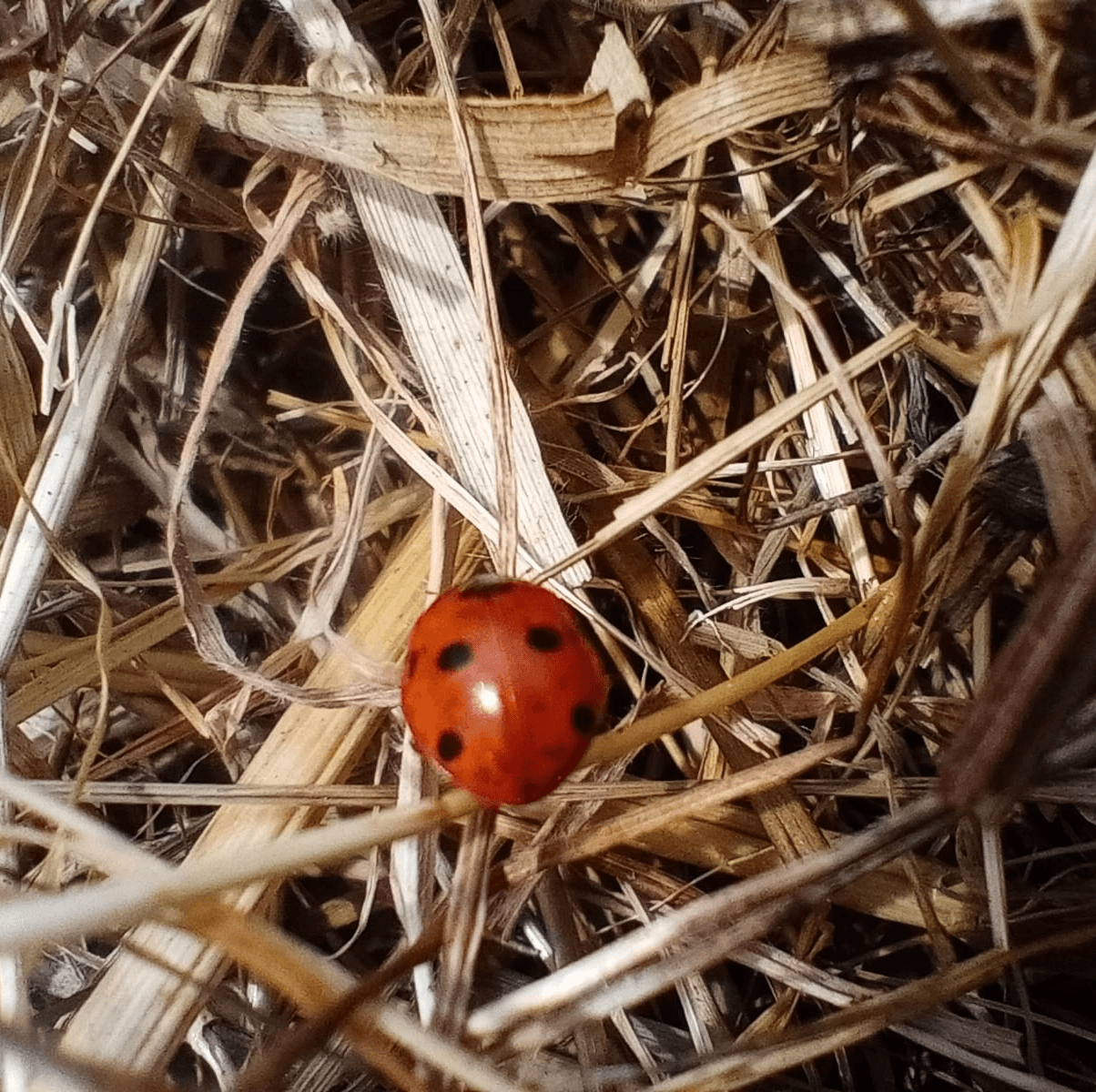
NO PESTICIDES, FUNGICIDES OR HERBICIDES
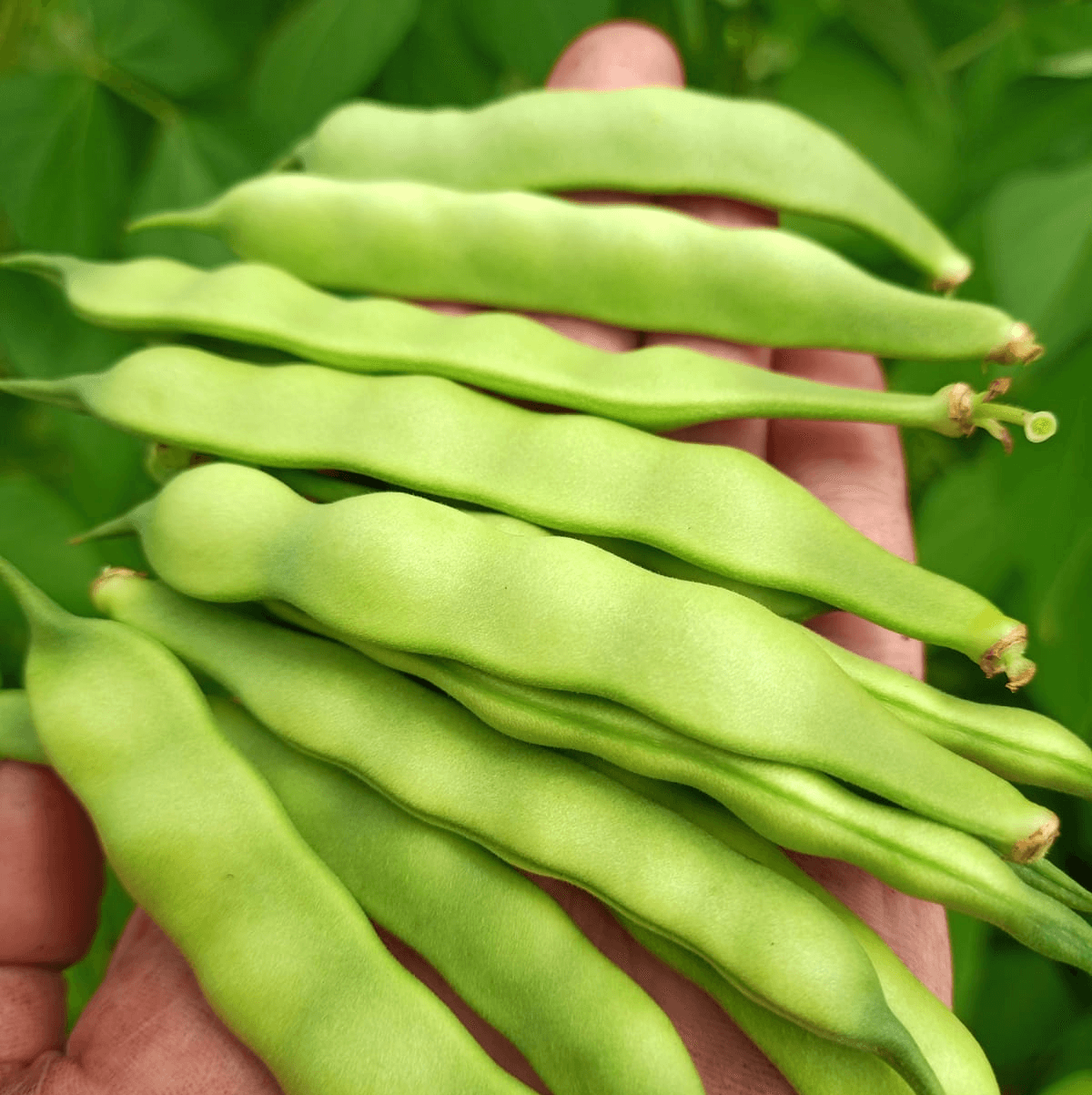
NO SYNTHETIC FERTILISERS
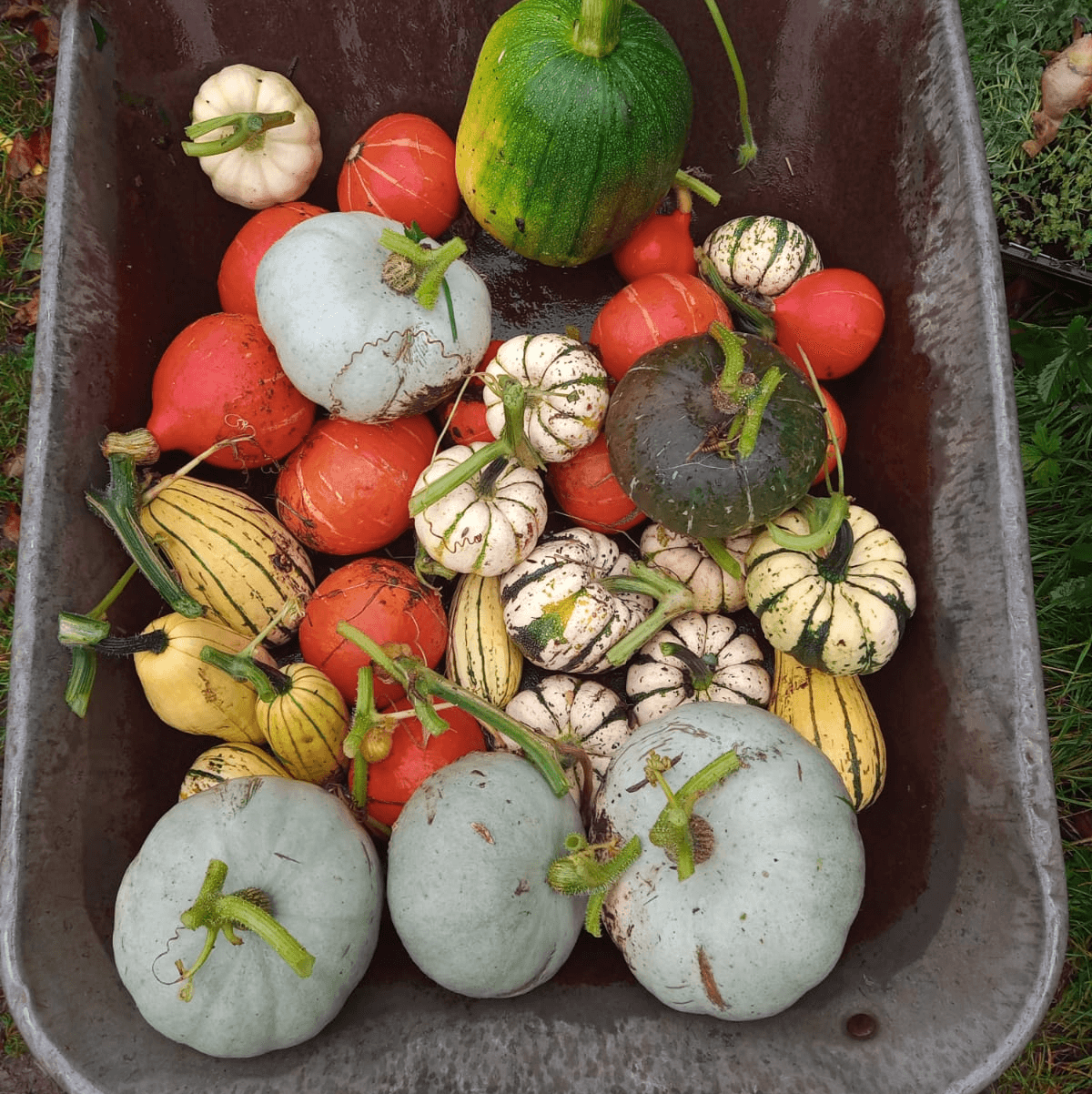
PRIORITISING SOIL HEALTH